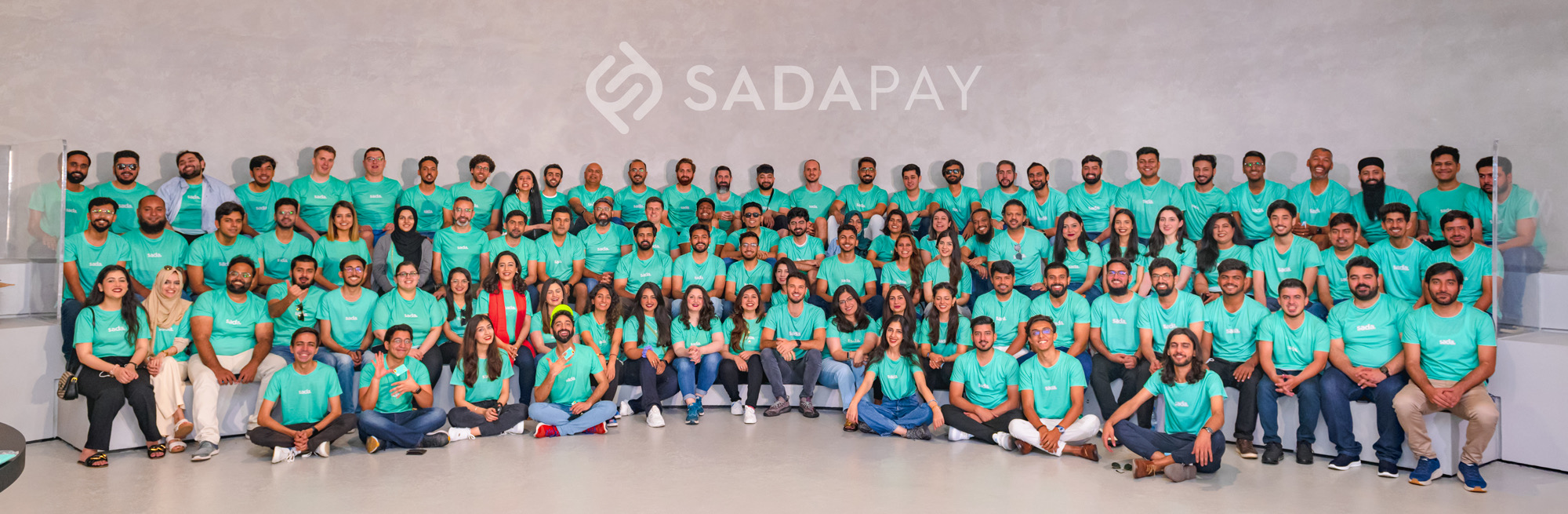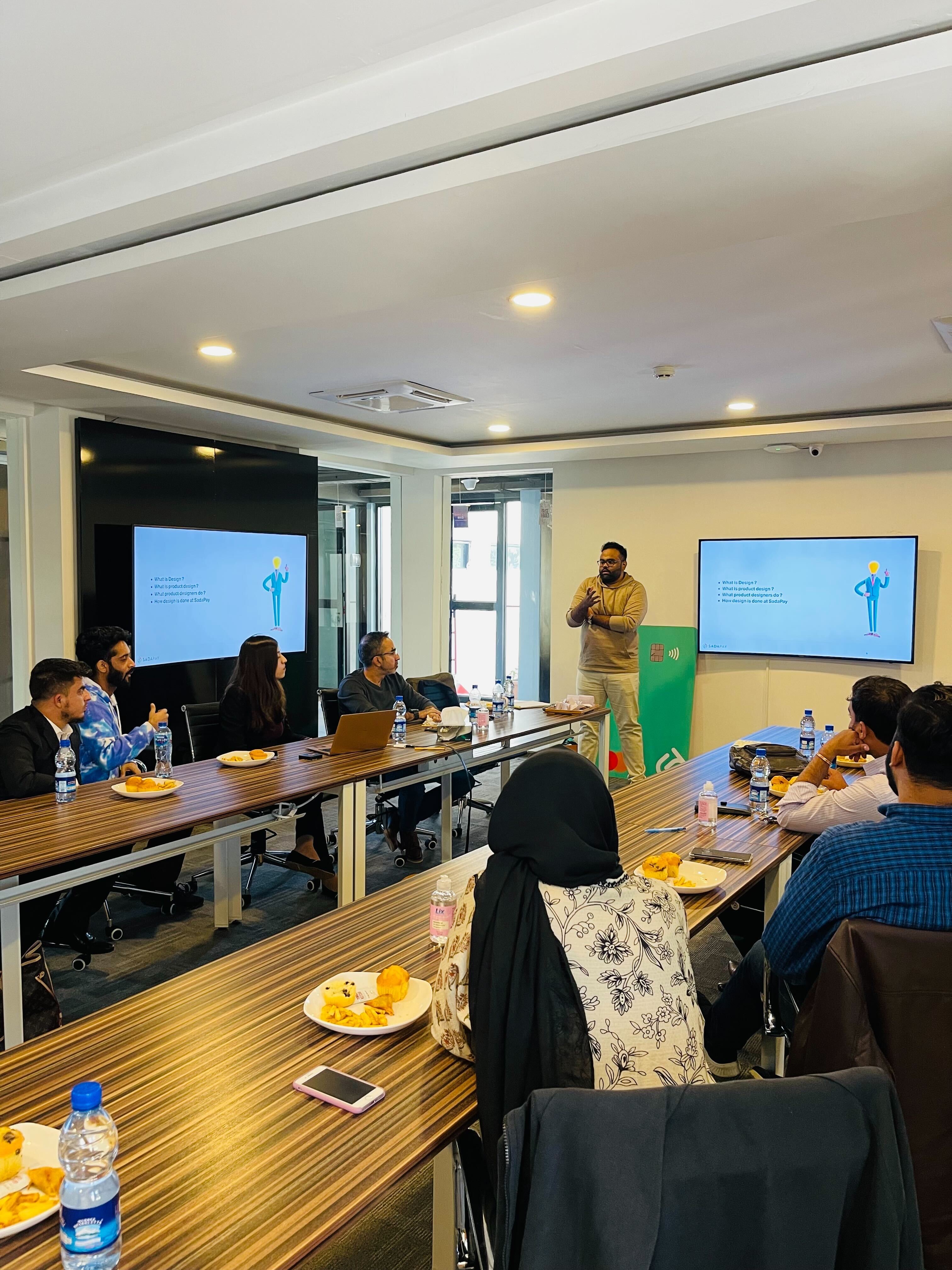
SadaPay · Waitlist case study · 2020 – 2024
Role · Founding Designer → Head of Product Design · Team 1 → 8
← SadaPay · Case study · 2020 – 2024
I designed a three-stage growth system.
Pakistan's first gamified fintech waitlist, built on how people behave, not on ad spend.
SadaPay · Waitlist case study · 2020 – 2024
Role · Founding Designer → Head of Product Design · Team 1 → 8
The first Pakistani fintech to generate genuine FOMO.
SadaPay · pre-launch, 2020
Pakistani banking was written for users who grew up with branches, paper forms, and tellers. I was designing for the next generation — the ones entering the financial system for the first time.
SadaPay deliberately designs for those who are young and yet to enter the market.
Design philosophy, on the record
Pakistan had banks, built for the teller, not the user. SadaPay wasn't building another bank. We were resetting what banking should feel like — and saying so loudly enough that the country saw a Pakistani fintech rewriting the category's norms, its experience, its design.
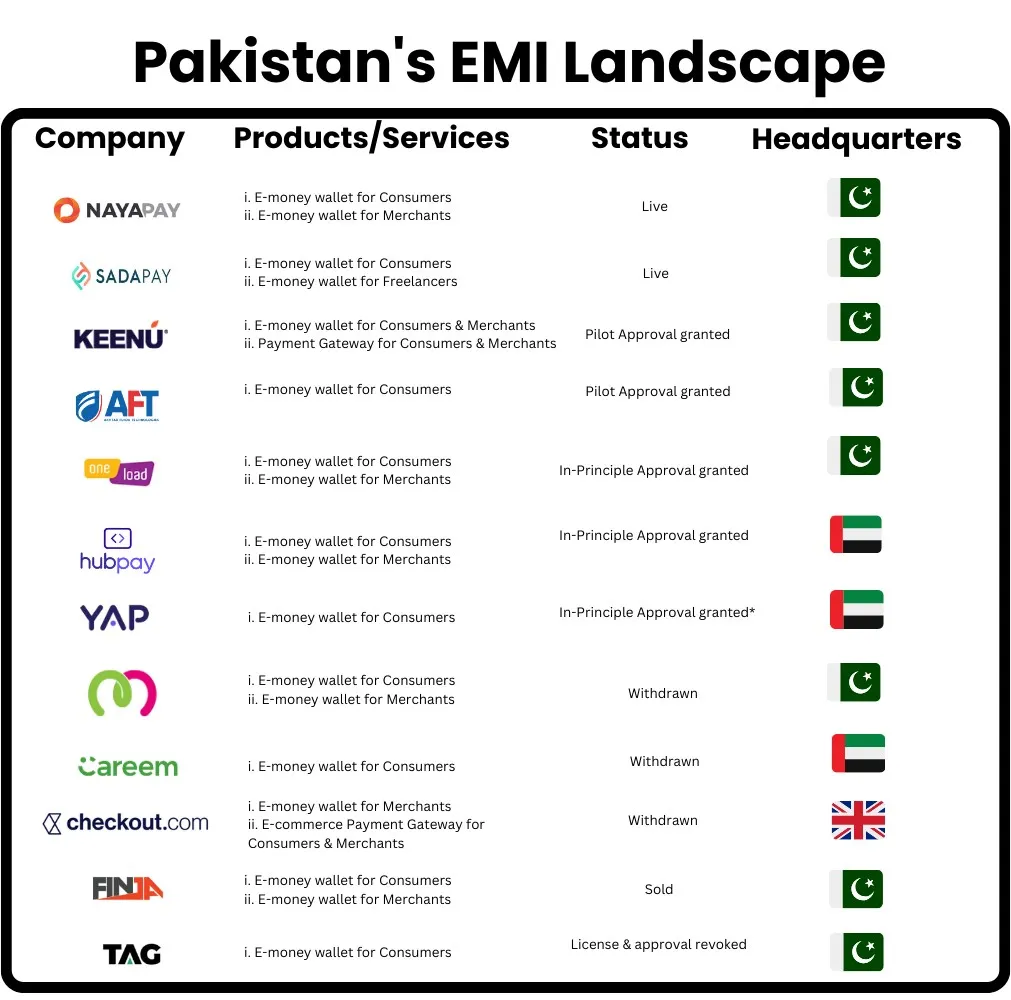
December 2020. No app, no card, no users. A pilot license capped at 1,000 onboardings — one of sixteen EMI licenses issued in Pakistan, in a market where only two would ever reach commercial scale. The brief I held with the founder was contrarian: design demand, don't buy it. Paid acquisition was the obvious play and the wrong one — ads are expensive to launch, run, design, and scale, and the spend stops the moment you stop paying. We needed demand the product generated on its own. Hype as a product, not as a marketing line.
The harder constraint was on the supply side: even with the demand, we couldn't absorb it. The app wasn't ready early on — and once it was, onboarding everyone at once would have broken what made SadaPay worth the wait. So the waitlist did two jobs at once:
Scarcity was the engine: demand compounded behind the gate while we built the capacity to let it through. A demand-management instrument, not a growth hack.
The three-stage system reads clean in hindsight. It wasn't built that way. I shipped one stage, watched how people actually behaved against it, found the real gap, and designed the next stage to answer it — incremental, agile, paced by the product itself. Pre-launch and post-launch growth turned out to need different fuel, and the system only revealed that as we went.
Stage one, pre-launch — status, the only currency we had with no app to offer. Watching that queue surfaced the next gap, so stage two, the bridge — scarcity. Then users went live and transacting, and the reward unit had to change again: stage three, post-launch — cash. Three reward units, three lifecycle stages — recognized as one coherent system in sequence, not planned as one up front. Earned, release by release.
I designed the waitlist as a product, not a holding pen. The bet: if waiting itself felt good, users wouldn't drop off. So I built three psychology principles into one screen.
Loss aversion — the queue position, typeset huge. Every visit reminded users what they'd lose if they didn't climb. Variable rewards — golden tickets dropped at random, and skip-the-line tiers paid out in uneven jumps: one invite could leap you 24,000 places, seven unlocked the Founders Club black card. Unpredictable on purpose — a slot machine inside a queue. Social proof and ownership — a public leaderboard turned invites into status, and because users had worked to climb, they guarded the place they'd built. The effort was the attachment.
The output wasn't a waitlist. It was a daily habit loop. Waiting became the engagement — and against a pilot licensed for just 1,000 onboardings, that engine drew 150,000+ into the queue before launch.
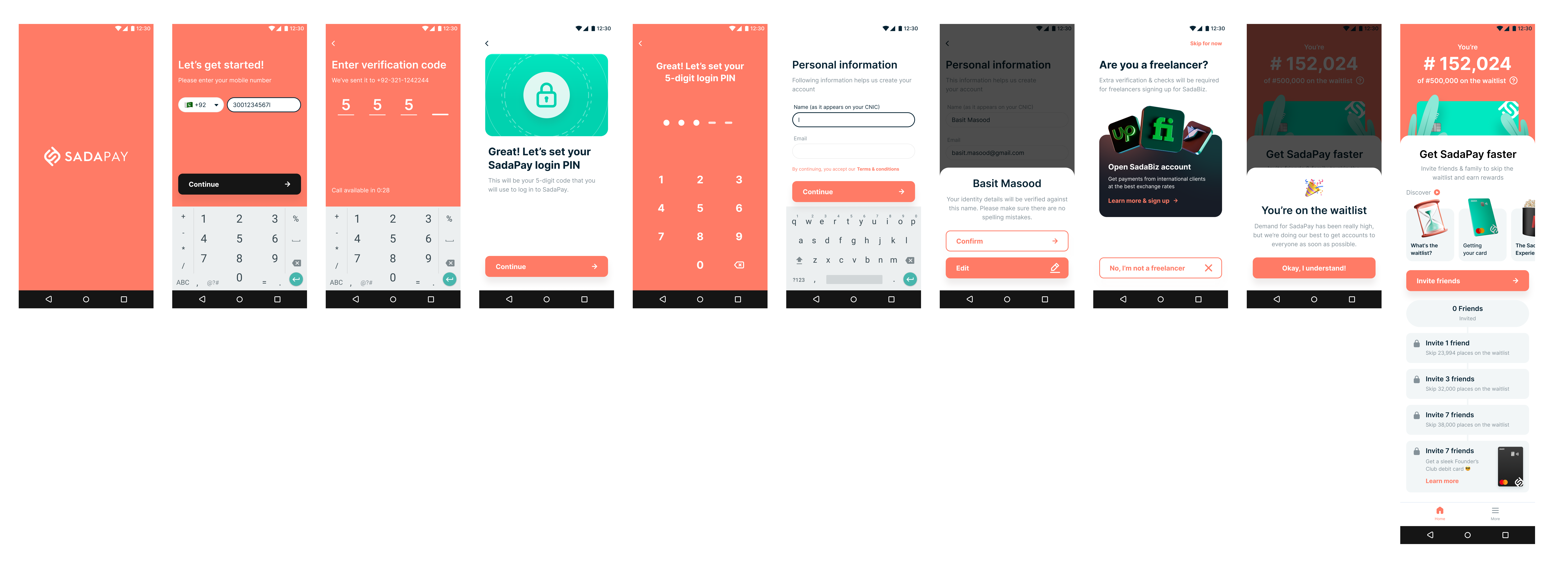
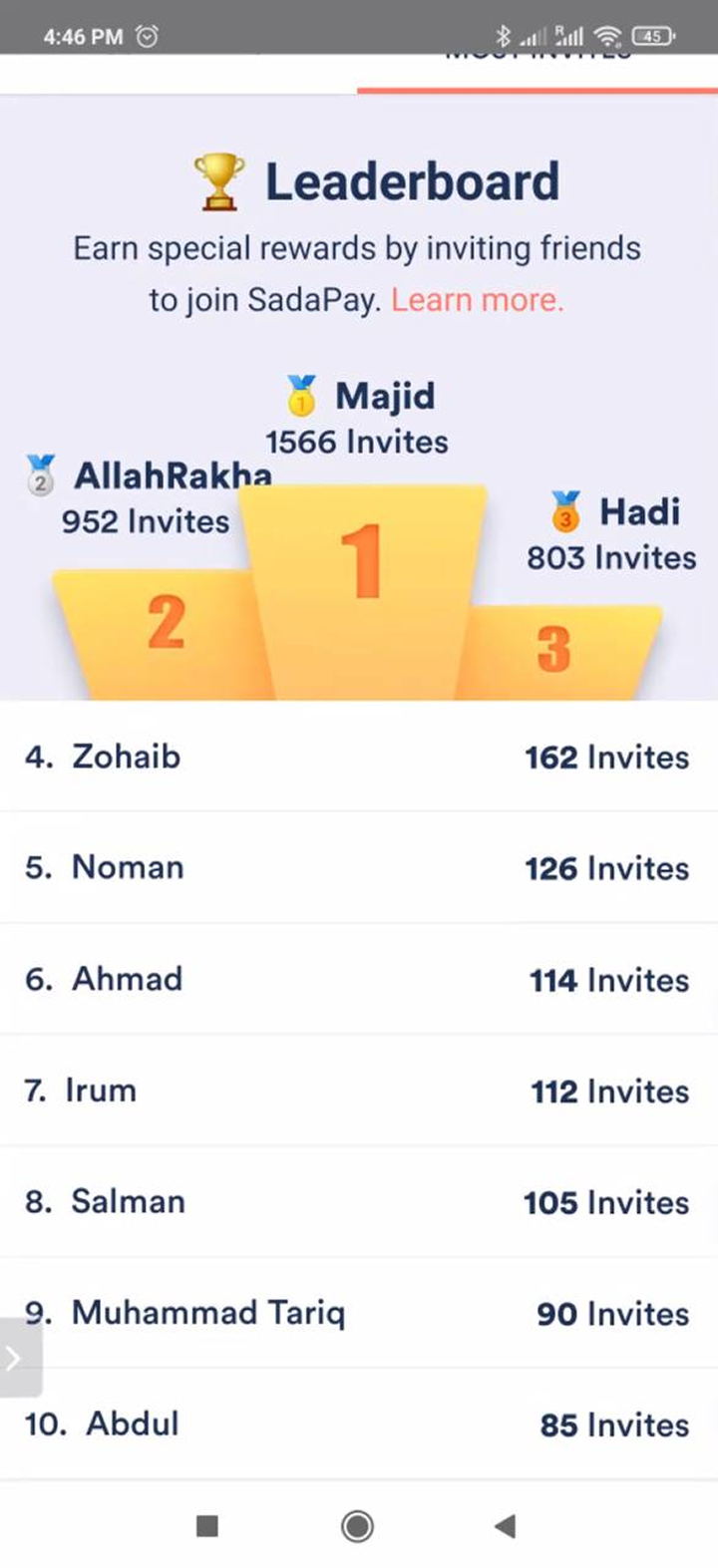
Drag the handle to compare the first build with the redesign. Same psychology underneath, sharper execution.
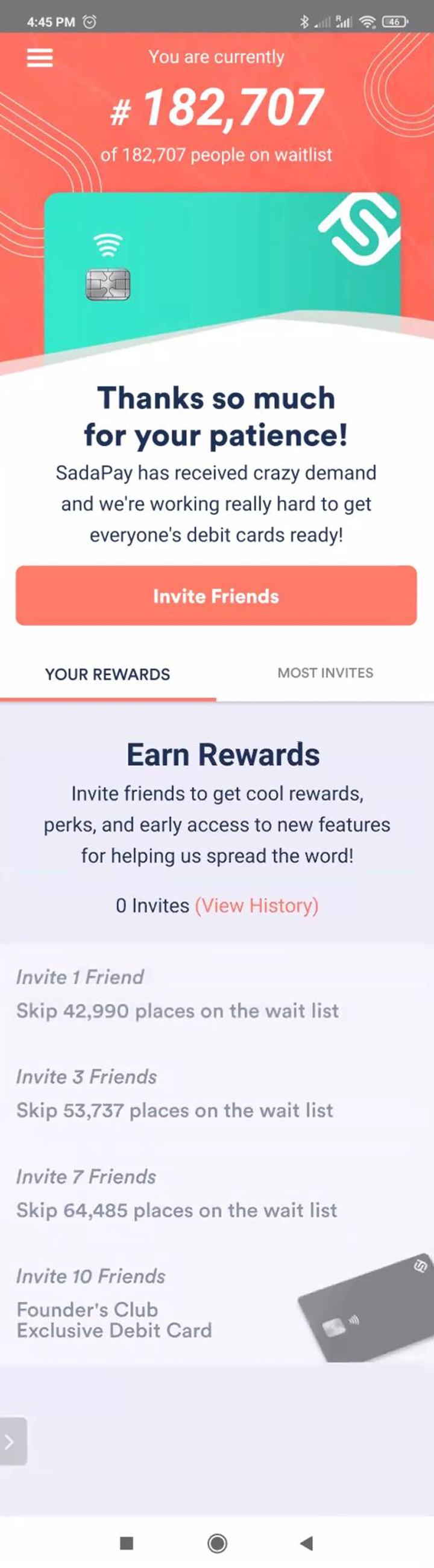 v1 · 2021
 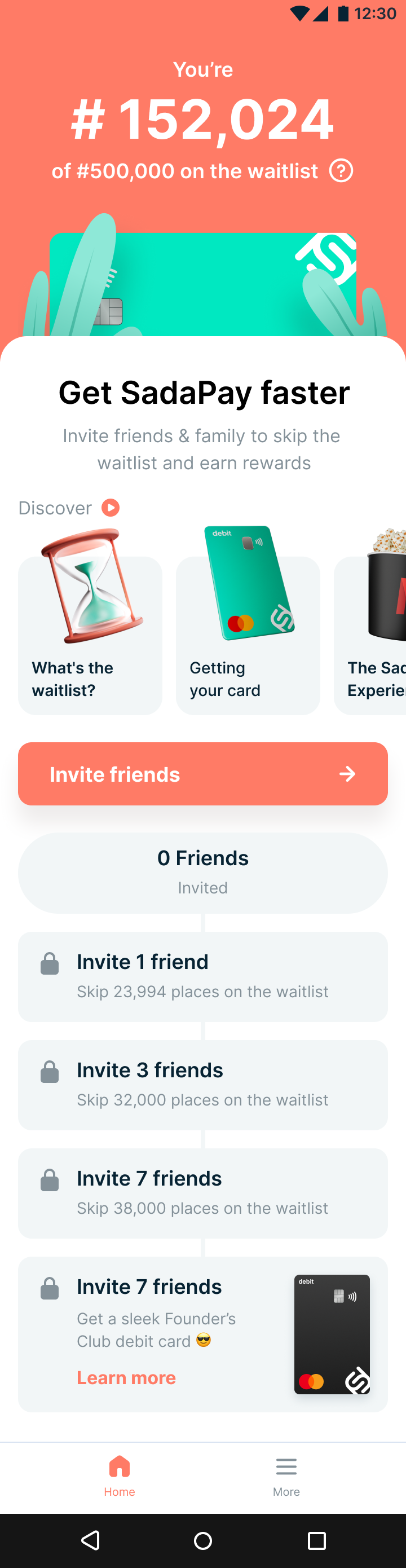 v2 · 2022
 Position became typographic hierarchy. Reward tiers got lock icons and a progress tracker. A stories carousel was added for education during the wait. The Founder's Club card preview switched from gray placeholder to the actual black card.
Soon after the pilot launched, employees fielded direct asks. "Can you graduate me?" Untrackable in the backend. So we shipped golden tickets — unique one-time codes dropped at random, redeemed to skip the line. Limited supply, presented on black like a Wonka prop.
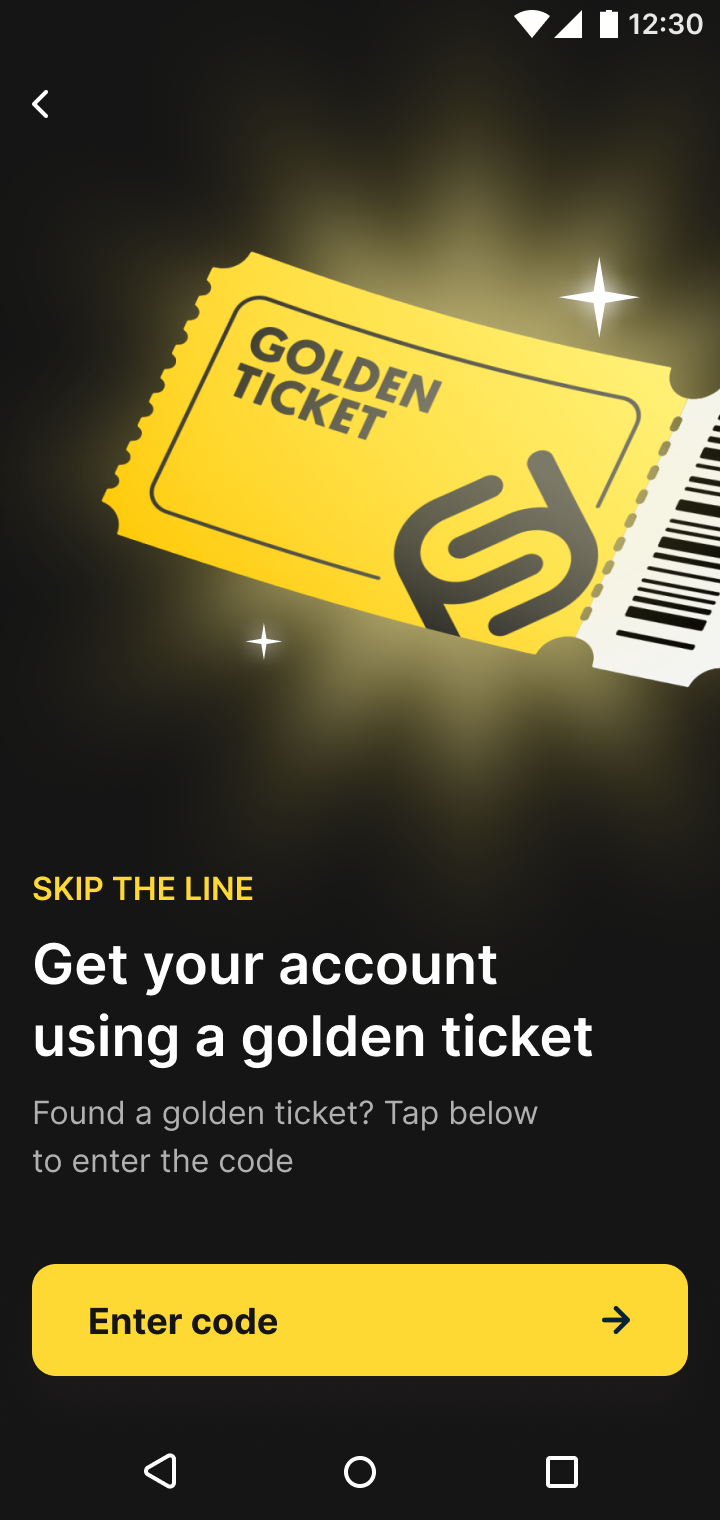
Recipients who'd run out of friends to invite started selling tickets on social media — first for free, then priced. YouTube tutorials appeared on how to "graduate" faster. Users started treating golden tickets like easter eggs — collectibles to share, screenshot, brag about.
Irfan Junejo, Pakistan's most-followed YouTube vlogger, tweeted in January 2023: "Sadapay Golden Ticket. You're welcome." One ticket given away to his 1.6M followers. Organic, unpaid, exactly the cultural circulation we couldn't have bought.
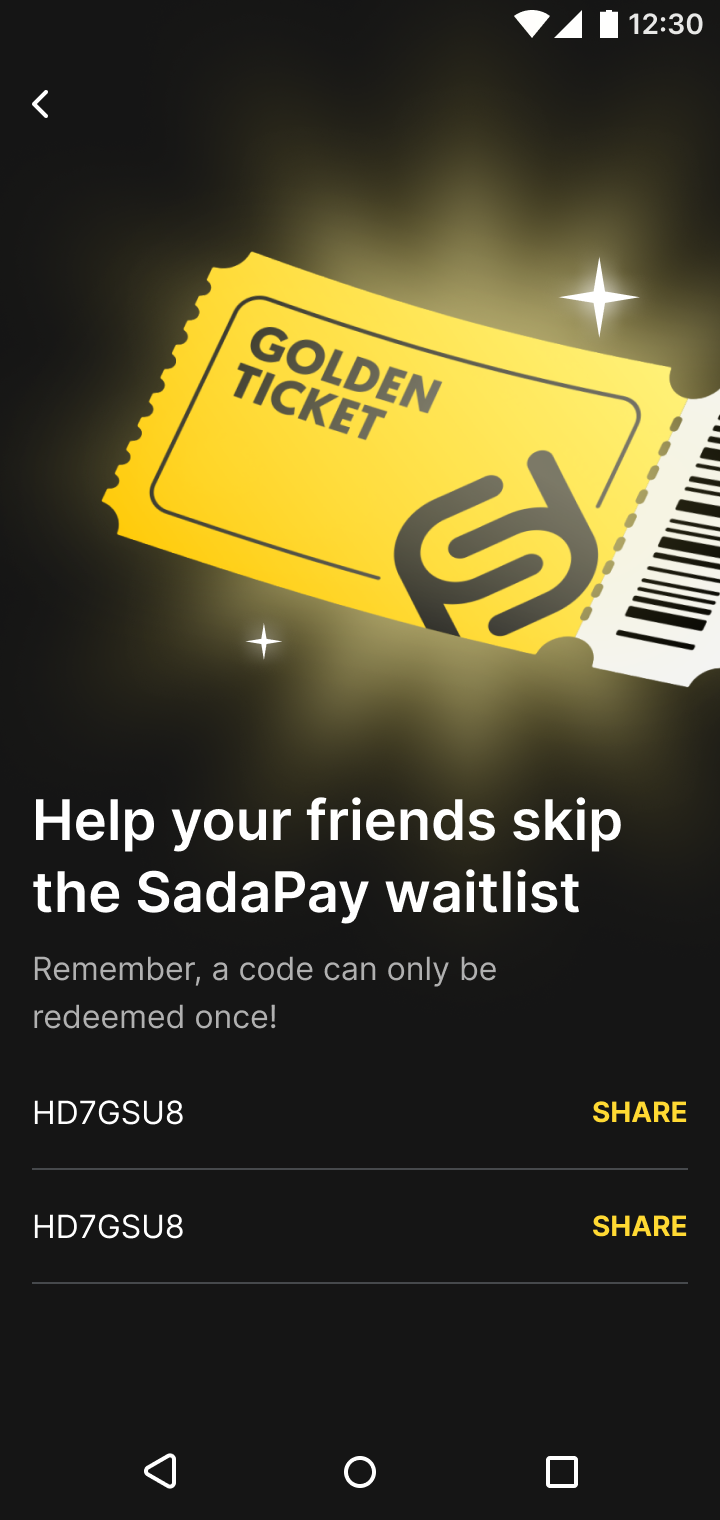
We let the secondary market run. Engagement was compounding, and people paying real money for invite codes was the strongest signal possible that we'd built something with perceived value beyond utility.
On the choice not to shut it down
We had two options. Shut it down or let it run. We let it run. A resale market for invite codes was a demand signal no dashboard could fake. We posted one short statement saying we weren't connected to the sellers, then went quiet. And we started intentionally throttling ticket supply.
The Founders Club shipments included three to five physical tickets per box. The apex reward unlocked more gifting power — our most loyal users became our biggest distributors.
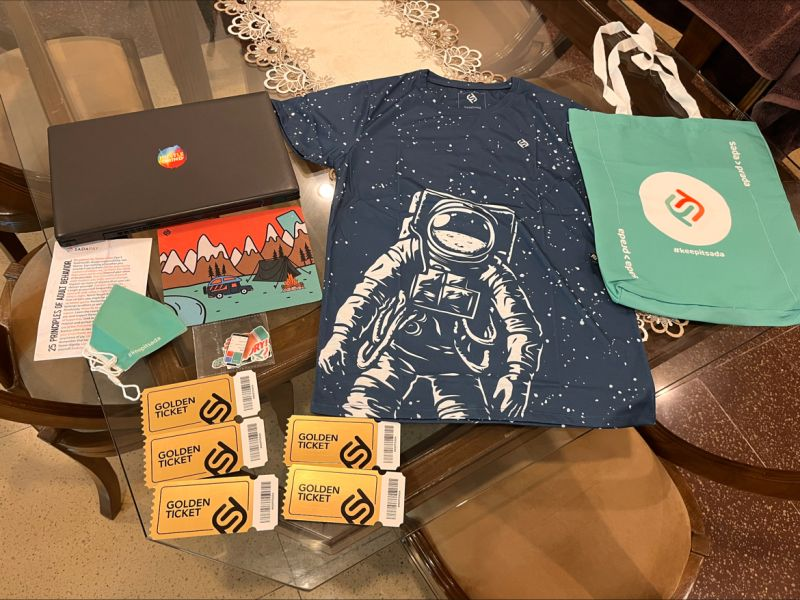
Each user became an inviter. The math only widened.
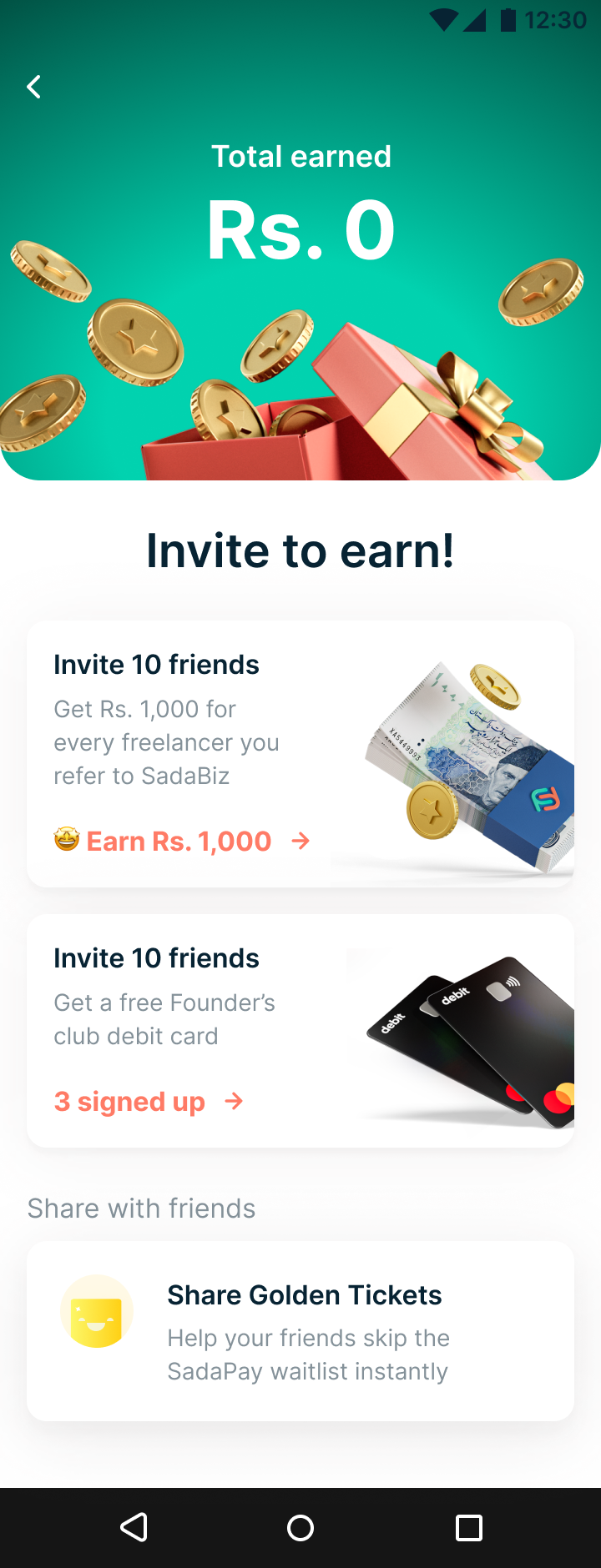
Status worked pre-launch because we had nothing else to offer. Post-launch, with users transacting, the reward unit had to switch to cash. We paid Rs. 1,000 per SadaBiz freelancer referral.
The economic model was clean. SadaBiz users earned dollars from international clients, which earned the company real revenue. Rather than spend it on social ads, we routed it back to users referring more freelancers. More invites → more SadaBiz users → more company earnings → more rewards to users. The marketing budget became the user.
Five million users came through the same status → scarcity → cash system between 2021 and 2023, processing $1 billion a year, with the cash stage steering the dollar-earning freelancers toward that volume. We became one of the two that reached scale, by designing demand instead of buying it. SadaPay sold to Papara for up to $50M in May 2024. After I left, people still introduce themselves to me with "I hold a Founders Club card."